OK so. Skiing.
I grew up in a place with no snow. Zero. Zip. NADA. So when I finally went on a ski trip in my 20s, I thought, “How hard can it be? I’m athletic. I work out. I’ll be fine.”
…
I was not fine.
I lasted approximately 45 minutes on the bunny slope before my legs turned to jelly and I had to go inside and sit by the fire and question my life choices.
That was the moment I realized that skiing asks for balance, coordination, and sustained effort. A little preparation can make the first days more enjoyable, even though a gym workout cannot replace a lesson on snow.
(if you’re reading this and nodding along because you also thought skiing would be easy — I feel you)
Anyway. Here’s what I’ve learned about getting your body ready for the slopes, so you don’t end up crying in a lodge like I did.
Why Skiing Will Destroy Your Legs (And You’ll Love It)
Let me set the scene.
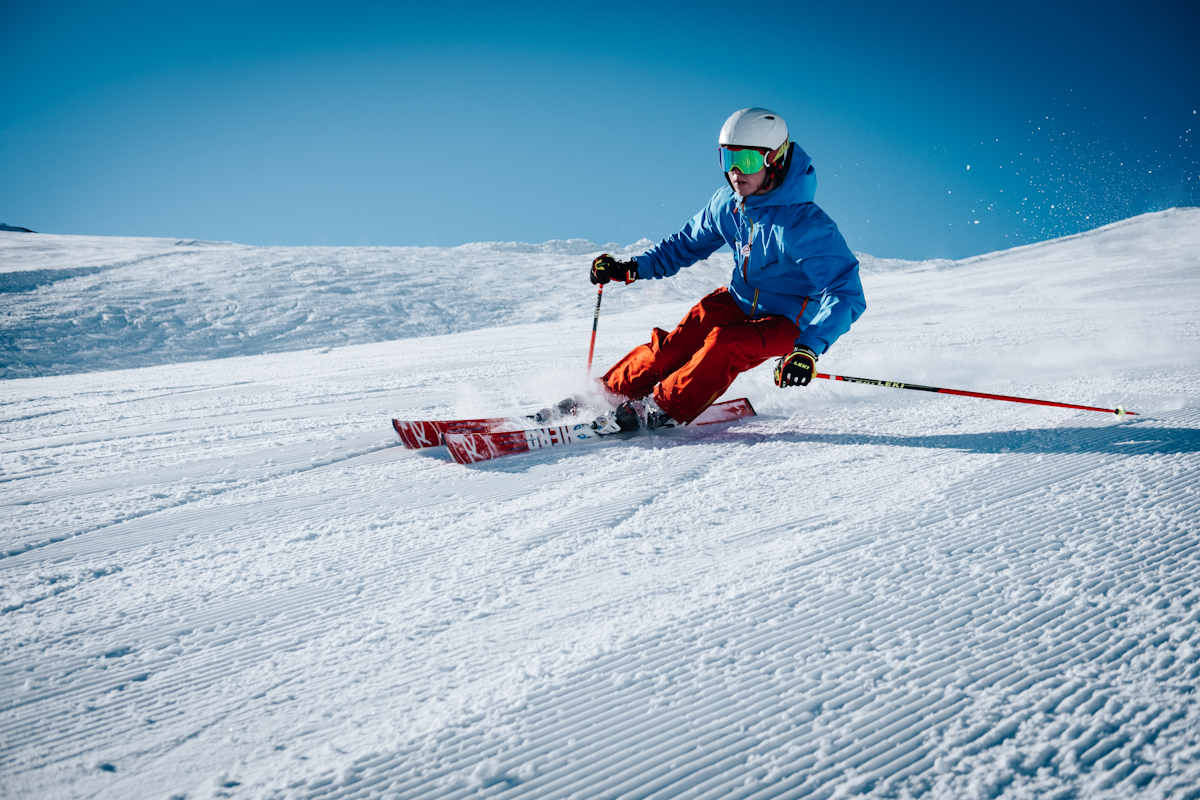
You’re on skis. You’re going down a mountain. Your legs keep adjusting as the terrain changes. On one turn you are absorbing a small bump; on the next you are trying to stay balanced while changing direction. After a few runs, that repeated work becomes obvious.
Skiing is not a continuous wall-sit, but strong legs and the ability to make repeated, controlled turns certainly help.
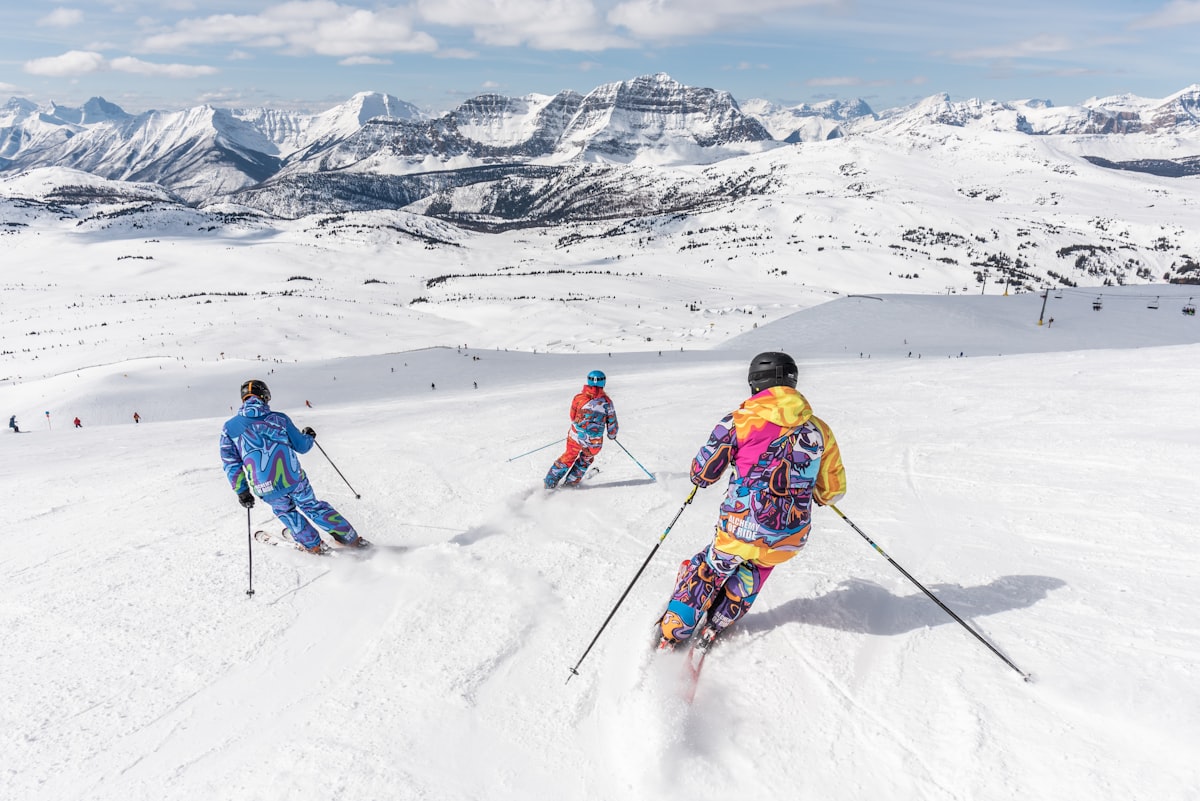
But here’s the thing — once you get the hang of it, it’s one of the most fun things you can do. The rush of going down a mountain? Unmatched.
The Muscle Groups That Actually Matter
OK so. If you want to ski without feeling like you got hit by a truck afterward, here’s what you need to train:
Quads (Your New Best Friend)
These are doing the heavy lifting. Literally. Every time you bend your knees to turn or absorb bumps, your quads are working.
I use short wall-sits as one option, along with comfortable squats and step-ups. Start with a duration you can hold without pain, then add a little time or a set as it becomes easier. There is no prize for making your knees hurt.
Glutes and Hamstrings
Your glutes stabilize you. Your hamstrings help with those explosive movements when you need to turn fast.
Squats. Lunges. Deadlifts. All the classics. Your glutes will thank you (eventually).
Core
You need core strength to stay balanced. If your core is weak, you’ll be wobbling all over the place.
Planks, side planks, and controlled carries can help you practice trunk stability. I choose movements I can repeat with good form rather than chasing a burning sensation.
Cardiovascular Fitness
A ski day alternates runs, lift rides, and breaks. The effort varies with the terrain, snow conditions, technique, and how fast you choose to ski. General aerobic fitness helps me enjoy more of the day without feeling rushed.
Walking uphill, cycling, or another aerobic activity you can do consistently is a sensible starting point. Short intervals can come later if they fit your fitness level.
My Training Routine (What Actually Works)
Alright. Here’s what I do now before a ski trip:
Several weeks out: Begin with two manageable strength sessions a week. Practice squats, step-ups, and a hip hinge, leaving at least a day between harder leg sessions.
As the trip gets closer: Add regular easy aerobic work, such as brisk walking or cycling. If you already tolerate that well, a few controlled faster intervals can be useful, but all-out sprints are not required.
In the final month: Keep practicing balance, leg strength, and controlled changes of direction. Increase the challenge gradually rather than suddenly doubling your workout volume. Rest days belong in the plan.
In the final week: Keep moving, but avoid a brand-new hard workout that leaves you sore on travel day. Arrive rested enough to focus on the lesson and the terrain.
On the day: Start on easy terrain, take an introductory lesson if you are new, and make your first runs gentle. Move a little before skiing, check your gear, and take breaks before you are exhausted.
A Simple Pre-Trip Session
The workout that finally felt useful to me was not glamorous. After five minutes of easy walking or cycling, I did two sets of comfortable squats, step-ups on a low, stable platform, and a hip hinge with a light weight. I finished with a short side plank on each side and a few minutes of gentle single-leg balance near a wall or rail. I rested enough between sets to keep my movements controlled.
That combination made more sense than trying to hold one wall-sit forever. Squats and step-ups train the legs through a range of motion. The hinge gives the back of the legs some attention. Balance practice reminds me that skiing is about managing where my weight goes, not merely surviving a quad workout. If a movement causes pain, I shorten the range, reduce the load, or ask a qualified professional for help.
I would repeat this session once or twice a week and leave room for walking, cycling, or another activity I enjoy. The goal is to arrive at the mountain feeling prepared, not exhausted from a heroic final workout. Ski Canada’s pre-season fitness guide also emphasizes balance, leg strength, core work, and a warm-up.
What I Do Differently on the Mountain
Fitness helps, but it does not teach me how to steer or stop. For a first trip, a lesson is worth more than another month of wall-sits. An instructor can help with equipment, stance, turns, and choosing a run that matches my ability. I also check the trail map and signs instead of following a confident friend onto terrain I have not learned to handle.
I start the day with easier runs and pay attention to fatigue. When my turns get sloppy or I stop noticing people around me, I take a break. Water and food matter during a long day too, especially if travel, cold, or altitude make the day feel harder than expected. I do not try to squeeze in one more difficult run just because the lift is still open.
The National Ski Areas Association’s Responsibility Code puts control first: be able to stop or avoid people and objects, respect people downhill, and follow signs and closures. That is a better target for a beginner than proving how fast I can go.
The Mistakes I Made (So You Don’t Have To)
Let me save you some pain. Here’s what NOT to do:
Not training at all: I did this. Don’t be like me. You’ll suffer.
Only training legs: Yeah, your legs are important. But your core and cardio matter too. Train everything.
Skipping the warmup: Going straight from the lift to a demanding run when I felt stiff was a poor choice. A gradual start and a few easy turns help me assess how my body and the snow feel that day. No warm-up eliminates every risk.
Trying to do too much too soon: I tried to go down a black diamond on my second day. I fell approximately 47 times. Start with the easy runs. Work your way up.
Getting Better (It’s a Journey)
Look. I’m not an amazing skier now. I’m… decent. I can go down most blue runs without falling. I can handle some black runs (slowly).
But I’m so much better than that first trip where I cried in the lodge. And that feels good.
If you’re just starting out, here’s my advice:
– Take a lesson. Seriously. The instructors know what they’re doing.
– Learn with an instructor how to stop, choose terrain you can handle, and ask for help when a slope feels beyond your control. Falls can happen, but they are not something to seek out.
– Take breaks. You don’t have to ski every second of every day.
– Have fun. It’s supposed to be fun, not a competition (unless you want it to be).
—
Want to get better at skiing?
– Take lessons: Find a local ski school.
– Train beforehand: Don’t show up to the mountain untrained.
– Get the right gear: Rent or buy skis that match your skill level.
– Be patient: It takes time to get good.
Tags: #SkiingFitness #SkiTraining #LegDay #WinterSports #GetFitForSkiing #SkiPreparation #MountainReady
发表回复