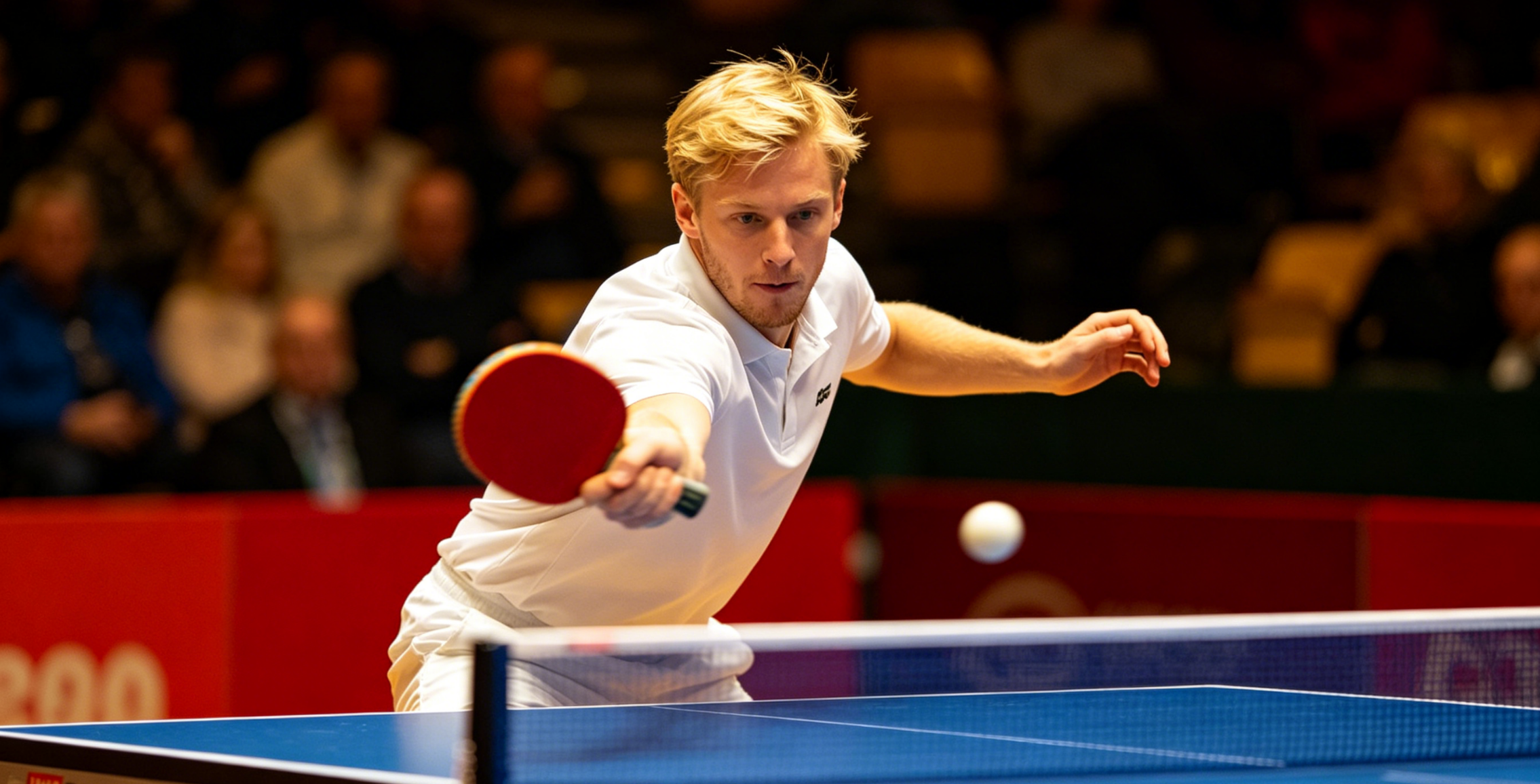
So. Table tennis. Or ping pong. Or whatever you want to call it.
I remember playing this game at family gatherings when I was a kid. You’d grab a wooden paddle from a dusty box in the garage, unfold that ancient net that was probably held together with tape, and hit the little white ball back and forth until someone hit it off the table.
Seemed simple enough, right?
Yeah. I thought so too. Until I actually tried to get GOOD at it. And I realized — this game is deceptively hard. Like, really, REALLY hard.
The ball is tiny. It moves fast. And if you think you can just swing wildly and expect it to go where you want, oh boy, do I have news for you.
But here’s the thing: once things start clicking, it’s incredibly fun. And honestly, I think more people should give it a proper shot instead of just treating it as a party game.
So here’s what I wish I’d known before I spent way too long being bad at this.
The Basics Nobody Bothers To Explain
Okay so table tennis is played on a table. There’s a net in the middle. You hit a lightweight hollow ball back and forth with small paddles (called rackets or blades, depending on who you’re talking to). A game normally goes to 11 points, but you must win by two if the score reaches 10-10. A match is played over an odd number of games; best of five and best of seven are common formats.
Sounds straightforward. Here’s what’s NOT straightforward: there’s actually a lot of technique involved. Power alone will not get you far: timing, placement, and reading the ball matter just as much. Table tennis is about precision, timing, and reading what your opponent is doing.
Your Grip Actually Matters (Who Knew?)
When I started, I held the paddle like I was shaking someone’s hand. Seemed natural. Made sense.
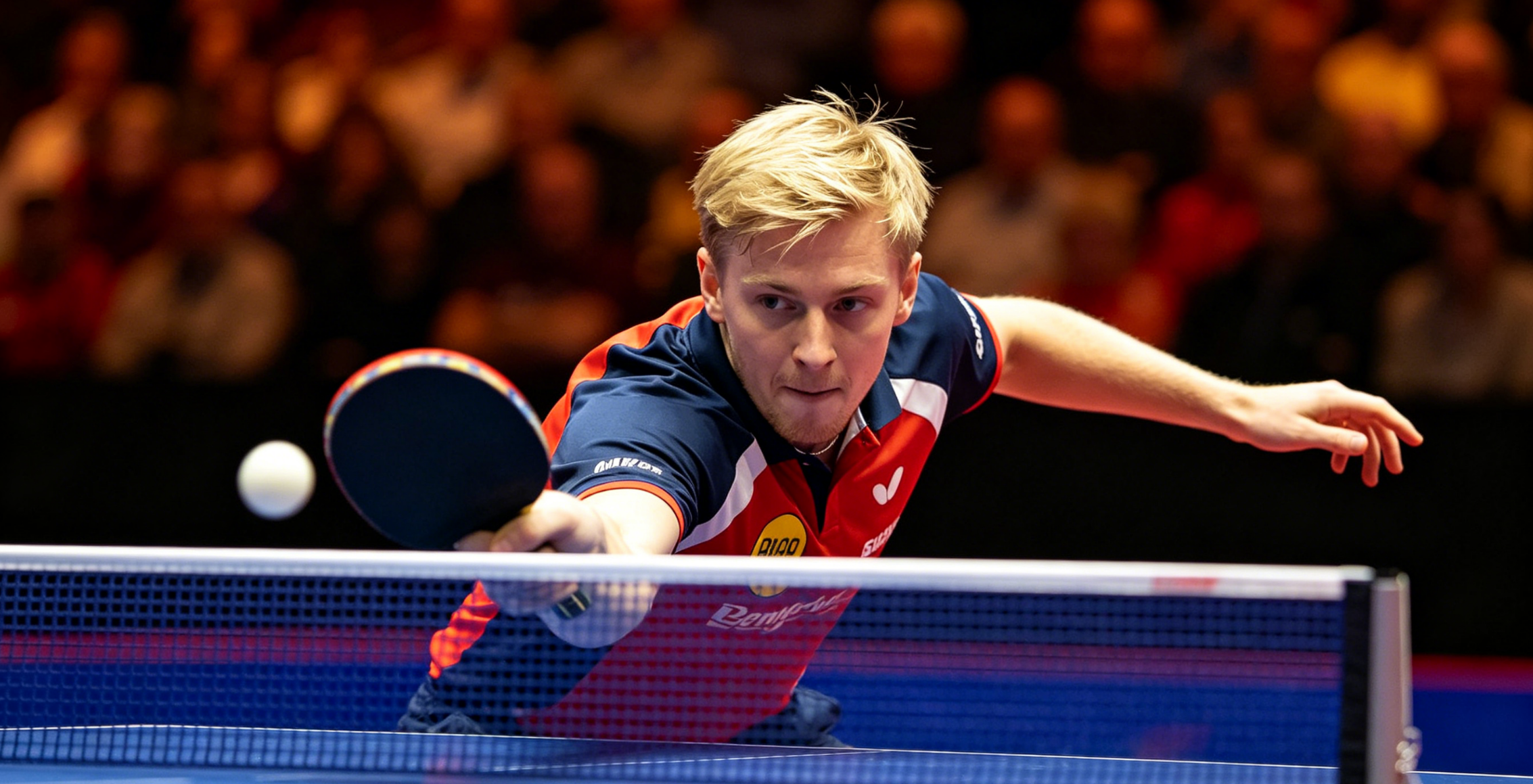
Turns out that grip? Called a “shakehand grip.” And it’s actually one of the two main grips used worldwide. The other one is called the “penhold grip” — where you hold the paddle kind of like a pencil.
I stuck with shakehand because that’s what I knew. But once I started researching grips, I realized they’re kind of like choosing a sports car — both will get you there, but they feel completely different.
Both grips support strong play, and each has variations. Try both briefly if you are new, then choose the one you can hold comfortably and learn the basic strokes with it. You do not need to treat that first choice as permanent.
Don’t be like me and switch grips three times in one year.
The Four Basic Strokes (Learn These First)
Here’s where I got confused early on. There are basically four things you can do with the ball:
The Forehand and Backhand Drive
A drive is a controlled attacking stroke against a ball you can meet comfortably. Use a compact swing, contact the ball in front of you, and aim for a repeatable trajectory before trying to hit hard. A push is a separate, usually shorter stroke used mainly against backspin.
Think of it like: gentle aggressive. You want to push the ball forward, not just block it.
The Block
When someone hits the ball hard at you, sometimes the best thing to do is just… block it. Hold your paddle at a steady angle and let the ball bounce off it. This sounds lazy but it’s actually a legitimate defensive technique used by some of the best players.
I used to try to counterattack every fast ball. Then I learned to block. My win rate improved almost immediately.
The Chop
This is a defensive shot where you cut under the ball, giving it backspin. When you chop, the ball dips down and then tends to float a bit after crossing the net.
Great for breaking momentum. Annoying to play against.
The Loop (or “Topspin”)
This is where things get fun. You swing up the back of the ball, generating topspin. The ball arcs high and then dips sharply at the end. It’s the “power shot” of table tennis.
I spent way too long avoiding loops because they felt awkward. Then I practiced for a few weeks and suddenly my game opened up completely. Loops are like… unlocking a new level.
Spin Is Everything (And Also Confusing)
Okay so. This is the part that messes people up.
In table tennis, you can put different kinds of spin on the ball:
– Topspin: Ball rotates forward, curves down
– Backspin: Ball rotates backward, floats/stays low
– Sidespin: Ball curves sideways
– Combinations: Topspin + sidespin, backspin + sidespin, etc.
And here’s the thing: spin changes how the ball behaves when it bounces. The incoming spin and your racket angle influence the direction of the return. Watch the opponent’s contact and make small angle adjustments instead of taking a full swing at every ball.
When I first played against someone who could actually spin, I thought they were cheating. The ball would hit my paddle and somehow fly off in a completely different direction than I expected. I’d block and it would go… not where I wanted.
That’s spin for you.
My advice? Start with a simple legal serve you can repeat. Add placement and spin once you can control where the ball lands; no one type of serve is automatically the easiest or hardest to return. Practice getting the ball to land on the other side of the table with backspin. Once that clicks, the rest gets easier.
Footwork Is Not Optional (I Learned This The Hard Way)
Early on, I’d just stand in one spot and reach for balls. That works when you’re playing casually. It does NOT work when your opponent starts moving you around the table.
Table tennis is basically a footwork sport with hitting involved. If you’re not moving your feet to get into position, you’re going to lose.
The basic footwork pattern:
1. You hit a shot
2. You return to center
3. You shuffle to get the next ball
Your ready position depends on your handedness, your last shot, and where your opponent is likely to send the ball. After each stroke, take a small recovery step toward a balanced position rather than standing in one fixed spot.
I started practicing footwork drills. Boring? Yeah. But it changed my game more than anything else I practiced.
Serving: The Underrated Weapon
Okay so. A lot of beginners don’t realize this, but your serve is one of your BIGGEST advantages. Because during a serve, YOU control the ball entirely. Your opponent can’t do anything until you hit it.
This means your serve can be loaded with spin that your opponent has to figure out. And in table tennis, a good server can win a LOT of points just from the serve itself.
What I do now:
– Vary the spin (backspin, topspin, or no spin)
– Vary the placement (short, long, to the corners)
– Vary the timing (fast serve vs slow serve)
The goal is to make your placement and spin harder to predict. Watch how the receiver handles each serve, then vary the next one. A surprising serve can create an opening, but it does not guarantee a point.
For a legal serve, start with the ball resting on your open, stationary palm behind the end line and above the playing surface. Toss it near vertically at least 16 cm without adding spin; strike it as it falls so it touches your side, then your opponent’s side. Keep the ball visible to the receiver throughout the service action. ITTF Laws of Table Tennis explain the full rule.
How To Actually Practice (Without a Partner Who Wants To Practice)
This was my biggest problem. I’d play casually with friends but never actually IMPROVE because nobody wanted to do drills.
Here’s what I figured out:
For spin: If you have access to a table, practice ten serves at a time toward a chosen target and note how many land where you intended. A robot can help with repetition, but it is optional. A wall can help you practice contact and coordination; it cannot reproduce the bounce and dimensions of a table.
For footwork: Shadow practice. Sounds silly but stand in the middle of the table and pretend-play, moving your feet. Do the footwork patterns without a ball.
For consistency: If a partner is available, begin with slow, cooperative rallies and count how many controlled returns you can make. Alone, use shadow strokes or a robot; wall practice is useful for coordination but is not the same as a table rally.
For game situations: Play matches but keep a “what am I working on today” in mind. Don’t just play to win every single game. Play to improve.
The Equipment Rabbit Hole (Brace Yourself)
Okay so. Racket setup.
Here’s what I didn’t know starting out: in official table tennis, you use a “blade” (the wooden paddle) with “rubber” on each side. And the type of rubber matters. A LOT.
Rubber types:
– Inverted rubber: Smooth surface, can generate spin easily. Most common type. Good for attacking.
– Pimpled rubber: Outward-facing pips come in different lengths and play very differently. Some favor direct hitting; others change how incoming spin is returned.
– Anti-spin: A low-friction surface that responds differently to incoming spin. It is a specialized option, not something a beginner needs to buy.
Sponge thickness also matters. Sponge thickness affects speed and feel, but the result also depends on the blade, rubber, and technique. A basic, controllable racket is enough while you learn.
I went down this rabbit hole for way too long, buying different rubber types, trying to find the “perfect” setup. Here’s what I’ll tell you: any setup that’s not completely wrong will work fine for years. Don’t overthink it.
Start with something basic. Inverted rubber on both sides. Get comfortable. THEN experiment.
My Progression (If You’re Curious)
First few months: Can rally 5-10 balls in a row. Started learning to do a forehand drive.
Month 3-4: Can do a basic serve. Starting to understand backspin. Lost a LOT of games but started feeling the game make sense.
Month 6: Figured out footwork is important. Finally won a game against someone.
Month 9-12: Started looping. My game opened up. Could consistently win against casual players.
Year 2: Joined a local club. Got destroyed for months by people way better than me. Learned SO much from getting beaten.
Year 3: Started placing in local tournaments. Not winning, exactly, but not getting completely destroyed either.
I’m still not good, honestly. But I’m way better than I was. And that’s the point, right?
Why You Should Try This
Look, I know table tennis doesn’t have the same prestige as tennis or golf. But here’s why I think everyone should play it:
1. It’s fast and exciting. No other racket sport moves as quickly. Watching (and playing) high-level table tennis is genuinely thrilling.
2. It’s incredibly mental. You have to read your opponent, anticipate spin, make split-second decisions. Your brain gets a workout, not just your body.
3. It’s social. Grab anyone, set up a table, play. Unlike some sports, you don’t need to find a partner of equal skill level. A complete beginner can have fun playing against anyone.
4. It’s good for your brain AND body. Hand-eye coordination, reflexes, strategic thinking. All while getting some cardio in.
5. It’s cheap to get started. You need a paddle, some balls, and a table. Or just a paddle and a friend with a table. Way cheaper than most sports.
So yeah. Give it a real shot sometime. Not the “oh let’s hit the ball around a bit” version. Actually try to learn.
You might surprise yourself.
—
Stuff I found helpful:
– YouTube: ATTILA, Janis S, and a ton of other table tennis coaches have great free content
– Apps: Table Tennis Connect has some decent training drills
– Clubs: Most cities have table tennis clubs. Look one up. Playing against better players is the fastest way to improve.
Tags: #TableTennis #PingPong #HowToPlay #Spin #Serve #Footwork #Sportsmanship
发表回复