I like dumbbells because they make strength training easy to start. A pair of weights can support pressing, rowing, squatting, hinging, and carrying without a complicated gym setup. I can use them at home or in a gym, and I can change the challenge as I learn. That convenience matters more to me than claims that one piece of equipment is the only thing anyone needs.
Dumbbells are useful, but they do not guarantee a particular physique or outperform barbells and machines for every goal. The best tool is the one that lets me train the movements I want, progress over time, and enjoy the process. Here is how I would build a practical dumbbell routine without treating soreness, failure, or exhaustion as the measure of success.
What Dumbbells Do Well
With one weight in each hand, I can train both sides together or one side at a time. A one-arm row or split squat helps me notice differences in control between sides. That does not mean dumbbells automatically “fix imbalances,” but it gives me a way to practice each side deliberately.
They also allow me to choose a hand position that feels comfortable for many presses and rows. Some people appreciate that freedom; others prefer the stability of a machine or barbell. More range of motion is useful only when I can control it comfortably. I do not need to lower a press as far as possible to get a good workout.
For home training, dumbbells are compact. I still need a clear floor area, a safe place to store them, and a load I can handle. An adjustable pair can be convenient, but fixed weights, a single dumbbell, or even bodyweight movements can be enough to begin. I would not buy a bench before I know how I want to train.
Build the Session Around Movement Patterns
Rather than collect every dumbbell exercise I can find, I choose a squat or step, a hip hinge, a push, and a pull. Those patterns cover the major muscle groups in a manageable session. I can add a carry or calf raise if I have time and a reason. This structure helps me avoid a workout that is mostly curls and presses.
I do not need a perfect one-to-one ratio of pushing and pulling exercises to keep my shoulders healthy. I do want enough pulling work to build back strength, especially if I enjoy pressing. The amount depends on the rest of my program and how the movements feel.
Squat or Step: Train the Legs
A goblet squat is a straightforward choice. I hold one dumbbell near my chest, place my feet comfortably, and sit down between my hips as far as I can control. I keep the load light enough to stand up without losing balance. If that is too demanding, a sit-to-stand from a sturdy chair is a useful starting variation.
Step-ups and split squats provide another option. I can begin without weights and hold a rail or wall for balance. Once I can repeat the movement comfortably, I add a light dumbbell. I use a sturdy step, never an unstable chair. I do not chase a particular knee angle or depth that causes pain.
Hinge: Train the Back of the Legs
For a dumbbell Romanian deadlift, I hold the weights close to my legs, soften my knees, and move my hips backward. I lower until I feel a comfortable stretch and can still control the movement, then stand tall. The exercise can train the hamstrings and glutes without needing to touch the dumbbells to the floor.
I learn the hinge without weights first if it feels unfamiliar. A mirror, a coach, or a light practice set can help me see what I am doing. If an exercise causes sharp or persistent pain, I stop and choose another variation rather than insist that every program must include it.
Push: Choose a Comfortable Press
A dumbbell floor press is a good home option because I do not need a bench. I lie on the floor with knees bent, hold the dumbbells near my chest, and press upward with control. The floor limits how far my elbows travel backward. If I have a stable bench, a bench press is another choice, but I do not force an unusually deep bottom position just because the weights allow it.
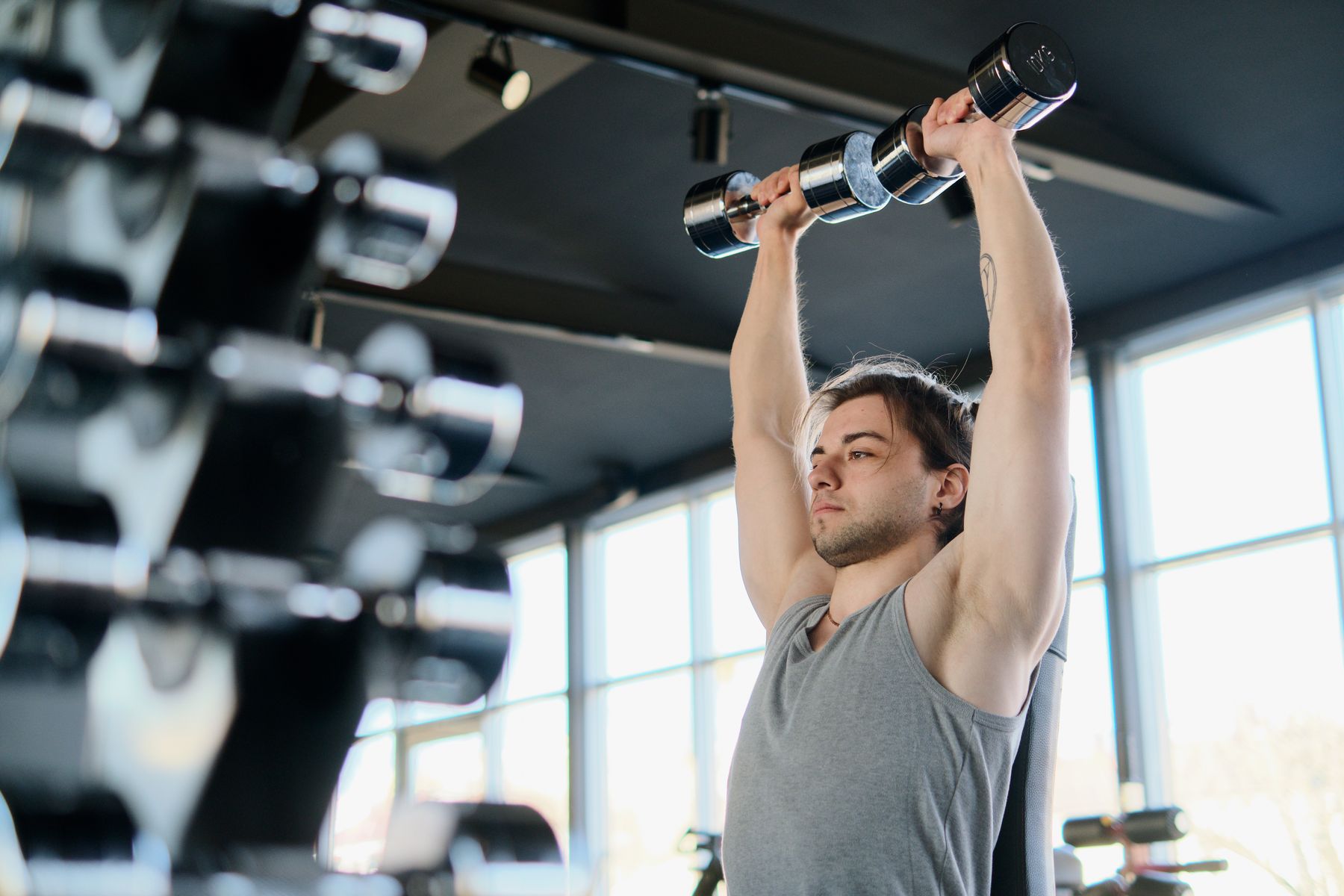
An overhead press can train the shoulders. I may do it seated or standing, depending on my balance and comfort. I begin with weights I can move without leaning far backward. If overhead movement is painful, I choose another press and seek advice if the problem continues. No exercise is mandatory for everyone.
Pull: Make Rows a Regular Part of the Plan
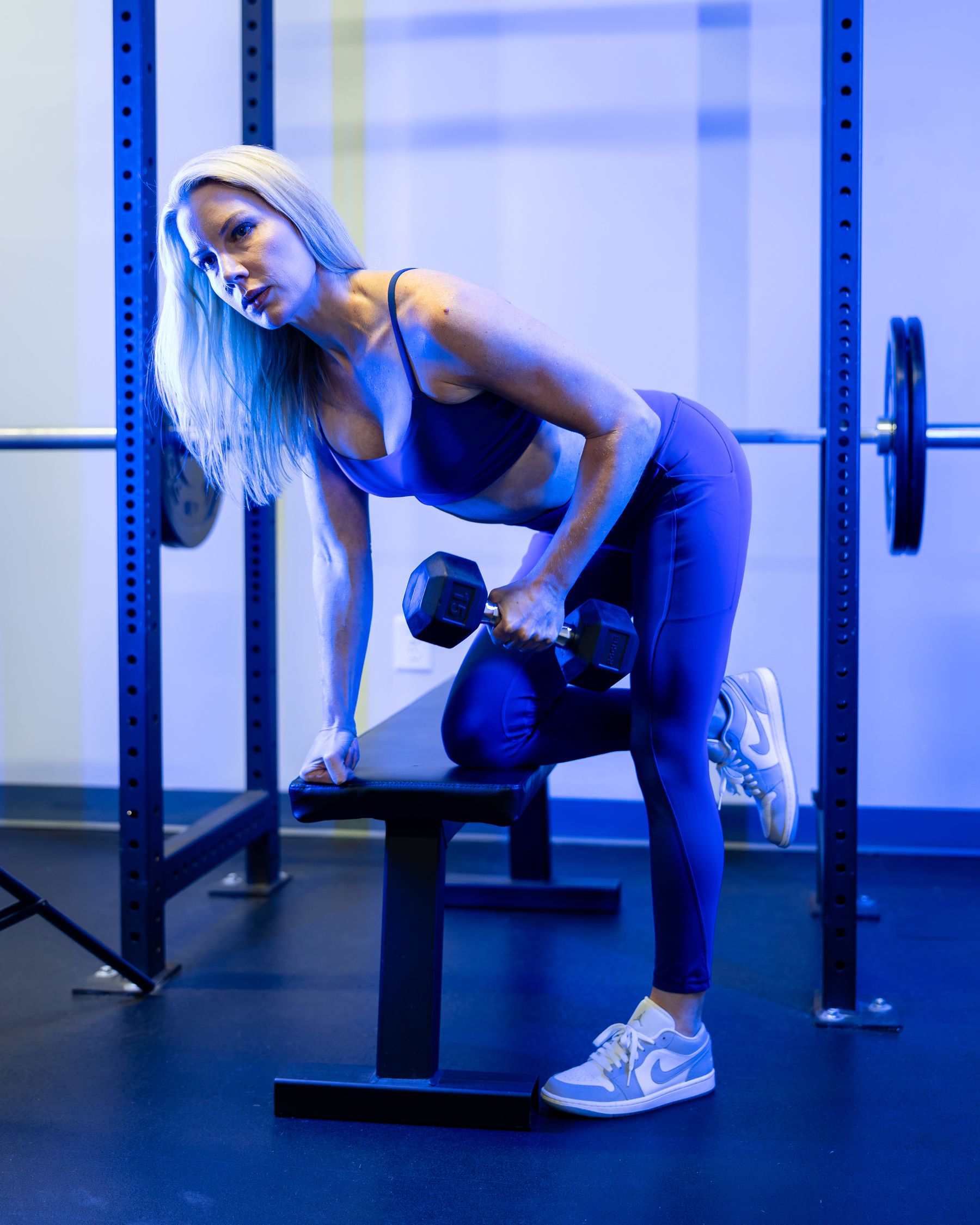
For a one-arm row, I support one hand on a sturdy bench or another stable surface, keep my torso reasonably still, and draw the dumbbell toward my side. I lower it under control. I do not need to yank the elbow as far behind my body as possible. A two-arm bent-over row is another option if I can hold the hinge comfortably.
A row is useful, but it does not cover every direction of pulling. If I have access to a pull-up bar or cable machine and want to train vertical pulling, I can add that separately. A dumbbell-only program can still be worthwhile without pretending it perfectly replaces every tool in a gym.
My Two-Day Full-Body Example
If I were new to dumbbells, I would begin with two nonconsecutive days each week. I would warm up with a few minutes of easy movement and a lighter version of the first exercise. One or two sets per movement are enough to learn the routine. I would choose a weight that leaves a few repetitions in reserve rather than testing my limit on every set.
- Day A: Goblet squat or chair squat, two sets of six to ten; floor press, two sets of six to ten; supported one-arm row, two sets of eight to twelve per side; dumbbell Romanian deadlift, one or two sets of six to ten.
- Day B: Supported step-up or split squat, one or two sets of six to eight per side; comfortable overhead press or another floor press, two sets of six to ten; one-arm row, two sets of eight to twelve per side; optional calf raises or a short carry.
These are examples, not exact requirements. I rest enough to perform each set with control. If I need only one full-body template, I can repeat Day A twice and change exercises later. If I already train regularly, I may use more sets or a heavier load, guided by my goals and recovery.
How I Progress Without Guessing
I write down the weight, repetitions, and how the last set felt. When I can complete the top of a repetition range with similar control across a few sessions, I may try a slightly heavier dumbbell. If the next weight is too large a jump, I can keep the current load, add a repetition, slow a movement slightly, or choose another variation.
Progress does not have to appear on a fixed three-month schedule. Some weeks are for practice. If I am tired or recovering from illness, maintaining the current task may be appropriate. I look for a trend over time instead of requiring a personal best every session.
When One Pair Becomes Limiting
A single fixed pair may feel heavy for shoulder raises and too light for squats. I can adapt by using one dumbbell for some exercises, two for others, or changing the movement. Eventually, more weight options may make progression easier. That is a reason to consider adjustable dumbbells or gym access, not a reason to delay starting.
I also do not assume that adjustable dumbbells and a bench cost the same everywhere. Prices and quality vary. If I am buying equipment, I check that the handles lock securely, the weights are easy to change, and the storage arrangement is safe for my space.
Common Mistakes I Watch For
The first is selecting a weight that forces me to swing or shorten every repetition. Some body movement is normal in certain exercises, but if I cannot control the task I intended, I reduce the load. The second is doing far too much volume on the first day. Starting modestly makes it easier to return and improve.
The third is treating a “finisher” as proof of a good workout. A circuit of thrusters, swings, and burpees may be demanding, but it is not required for strength or muscle growth. I would rather finish a focused session with energy left for the rest of my life. I also avoid claiming that a short circuit burns a predictable number of calories.
Finally, I pay attention to setup. A stable bench, clear floor, secure weights, and enough room to put dumbbells down matter. I do not press heavy weights alone if I cannot safely get into and out of position. Sharp pain or a sudden loss of control is a reason to stop and reassess.
The Routine I Would Keep
Dumbbells give me a flexible way to train, but the equipment is only part of the plan. I choose movements that cover my body, use loads I can control, practice them regularly, and add a little challenge when I am ready. If another tool suits a goal better, I can use it without betraying a “dumbbell-only” rule.
That is what makes the routine sustainable for me: a simple starting point, honest progression, and enough flexibility to fit real life. I do not need a world-class physique promise to see value in picking up a pair of weights and learning to use them well.
发表回复