I want strong legs for more than a demanding “leg day.” They help me climb stairs, carry things, walk farther, and participate in sports I enjoy. Training them can also be satisfying in its own right. But I do not need to leave the gym unable to walk for a week to make progress. That kind of soreness tells me I probably did too much too soon.
My approach is to choose a few movements I can repeat, learn them well, and increase the challenge gradually. A squat rack is useful for some goals, but it is not the entry ticket. Bodyweight, a chair, dumbbells, machines, and resistance bands can all help me train my lower body. The best starting point is one I can do safely and return to next week.
What I Am Training
The quadriceps at the front of my thighs help straighten my knees. The hamstrings at the back help bend the knees and work with the glutes in hip extension. The glutes contribute to hip movement and stability, while the calves help me push through the foot and control the ankle. Real movements use several of these groups together.
I do not need to isolate every muscle in every session. A squat or step-up emphasizes a knee-bending pattern. A hip hinge emphasizes the back of the legs and hips. A lunge or split squat gives me a way to practice one leg at a time. Calf raises can add focused work if that fits my goal. This combination covers more useful ground than chasing a single “best” exercise.
Why I Start with a Manageable Squat
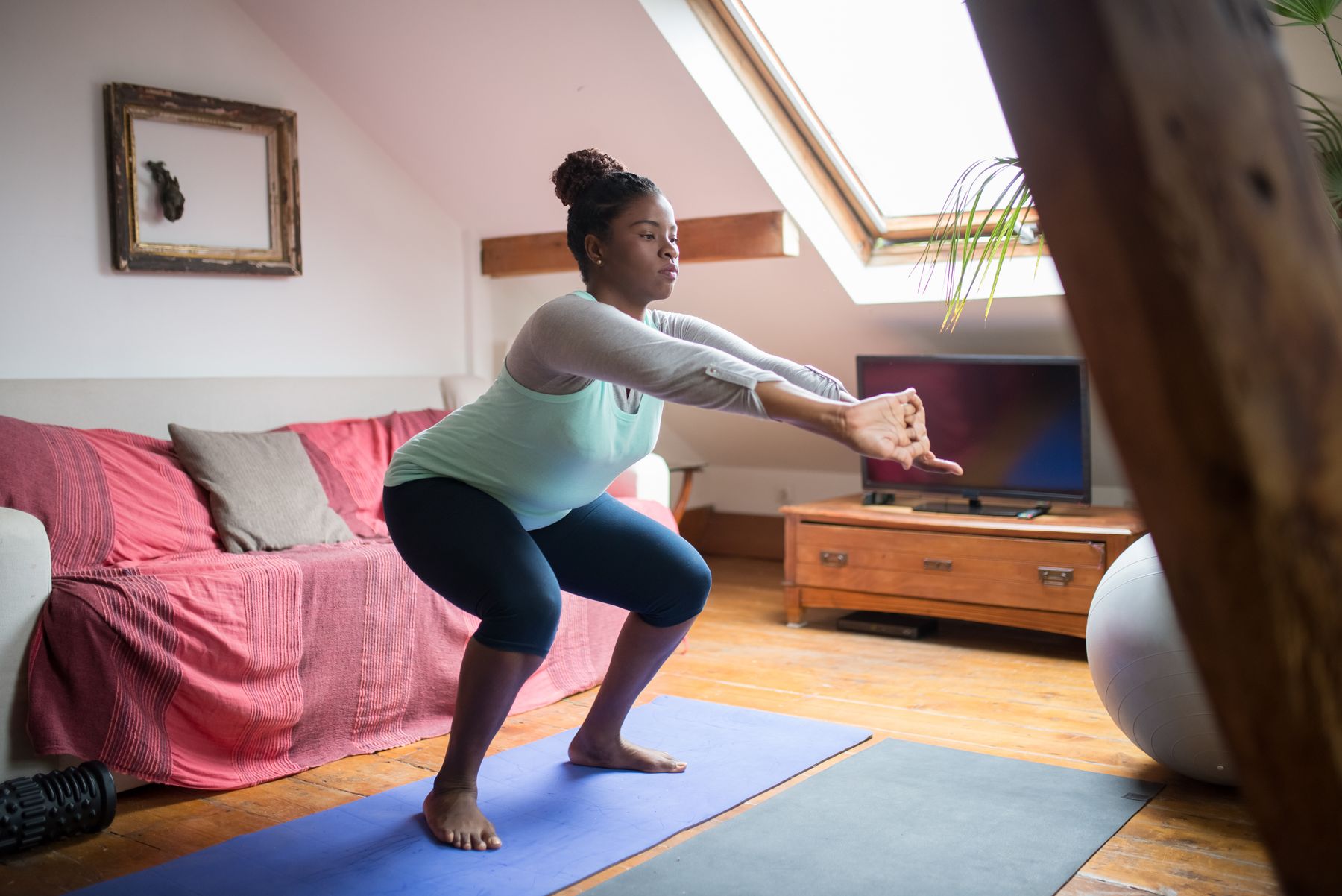
For a beginner, I like a sit-to-stand from a sturdy chair. I place my feet comfortably, lean forward as needed, stand up with control, and sit down without dropping. When that feels steady, I can use a lower seat, hold a dumbbell, or try a free-standing squat. I choose a depth that lets me keep control and does not provoke pain.
A barbell back squat can be a great option, but it is not automatically superior for everyone. It asks for equipment, practice, and an appropriate setup. I do not insist that every hip crease must pass below the knee or that every knee must stay behind the toes. Body proportions and goals change how a comfortable squat looks.
The Hip Hinge: A Different Job for My Legs
A hinge begins by moving the hips backward while the knees bend a little. I can practice it with my hands on my hips, then use light dumbbells for a Romanian deadlift. The weight stays close to my legs, and I lower only as far as I can control without losing the shape I intend. I should feel effort around the hips and back of the thighs, not chase the floor with the weights.
The hinge does not have to be perfect on day one. I can use a smaller range, a lighter load, or coaching if I am unsure. If I have persistent back pain, I do not diagnose it as “weak hamstrings” from an article; I seek individualized guidance.
Single-Leg Work Without a Balance Test
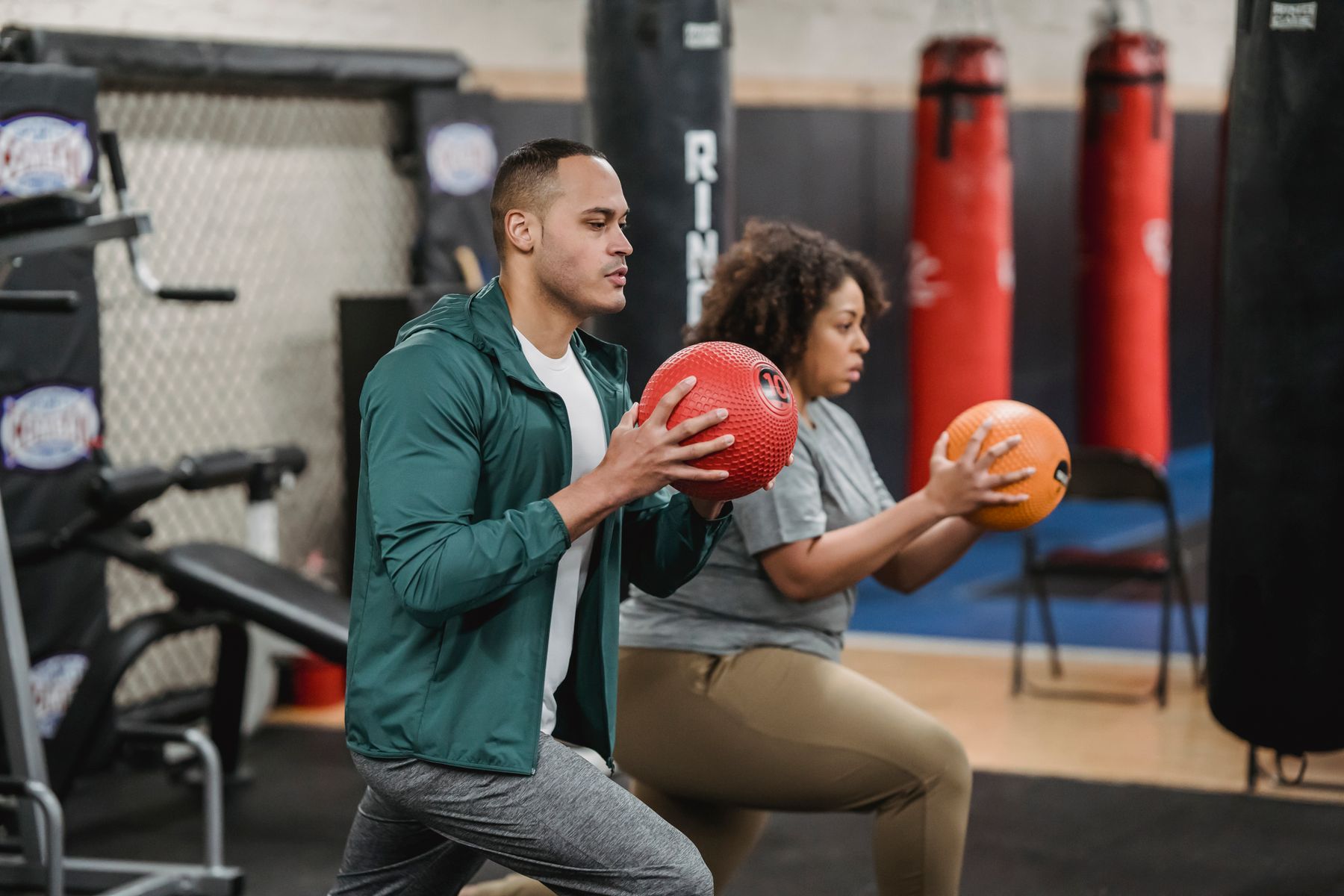
Step-ups, reverse lunges, and split squats challenge each leg while also asking for balance. I begin with a low step or hold a rail if needed. A split squat with both feet on the floor may be more approachable than a rear-foot-elevated version. I choose the exercise I can repeat smoothly rather than the hardest variation I can survive once.
My front knee can travel forward during a lunge if the movement is comfortable and controlled. There is no universal rule that it must remain perfectly vertical. I pay more attention to a stable foot, a manageable range, and whether I can stand back up without twisting or rushing.
Where Hip Thrusts and Calf Raises Fit
Hip bridges or hip thrusts can add another way to challenge the glutes. I start on the floor with a bridge if a bench setup feels awkward. I lift until my hips reach a comfortable position, pause briefly, and lower with control. The movement does not need to produce a dramatic “burn” to be useful.
Calf raises are simple: I rise onto the balls of my feet and lower slowly, using a wall or rail for balance. I can do them with both legs and later consider a single-leg version. I do not promise a specific increase in calf size after twelve months. Response varies, and consistency matters more than a guarantee.
My Beginner Plan: Two Sessions a Week
If I were starting from little lower-body training, I would use two sessions on nonconsecutive days. I would begin each with a few minutes of easy walking or cycling and a light practice set of the first movement. One or two sets per exercise can be enough to learn the movements. I would leave a few repetitions in reserve rather than pushing every set to failure.
- Session A: Chair squat or goblet squat, two sets of six to ten repetitions; light Romanian deadlift, two sets of six to ten; supported step-up, one or two sets of six to eight each leg; calf raise, one or two sets of eight to fifteen.
- Session B: Squat variation, two sets of six to ten; hip bridge, two sets of eight to twelve; supported reverse lunge or split squat, one or two sets of six to eight each leg; optional calf raise, one set of eight to fifteen.
Those ranges are examples, not thresholds I must hit in pain. I can rest long enough to perform the next set well. If a movement is new, I may practice it without weight first. If I have mobility limits or an injury, I choose a variation with professional guidance when appropriate.
How I Progress After the First Weeks
I keep a simple note of the exercise, variation, load, sets, and repetitions. When I can complete the current task with consistent control over several sessions, I might add a repetition, use a slightly heavier dumbbell, or add a set to one movement. I do not change every exercise at once. Holding steady for a week is also a valid choice.
If the next available dumbbell is too heavy, I can stay with the current one and improve control or use a different tool. If soreness lasts so long that I cannot train again comfortably, I reduce the workload. Progress is not measured by how difficult it is to descend the stairs afterward.
What Changes for an Experienced Lifter?
Someone who already trains regularly may need more total work or more challenging loads to keep progressing. A barbell squat, leg press, loaded hinge, split squat, and leg curl can all have a place. The right number of sets depends on the goal and recovery, not a universal rule that every muscle needs exactly ten to fifteen sets each week.
If strength in a specific lift is the goal, I spend more time practicing that lift and gradually increasing load. If muscle size is the goal, I may use several exercises and enough weekly work to challenge the target muscles. For athletic power, I would treat jumps as a separate skill: low volume, good landings, and full attention. I would not add exhausted jump squats at the end of every hard leg workout.
Warm-Up, Recovery, and Food
A warm-up can make the first work set less abrupt. I start with easy movement, then practice the exercise at a lighter effort. The length depends on the session. A light home workout may need only a short lead-in; a heavy barbell set may call for several gradual practice sets. A warm-up cannot guarantee that I will never be injured.
Between sessions, I pay attention to sleep, overall food intake, and how I feel. Protein-containing foods support muscle adaptation, but legs do not require their own special protein target or a mandatory creatine dose. Carbohydrate-rich foods can help fuel demanding activity. I build meals around my whole training week rather than treating leg day as a separate nutrition system.
When I Pause or Change the Exercise
Ordinary effort and some soreness can happen when I try a new movement. Sharp pain, swelling, sudden loss of strength, or symptoms that worsen as I continue are different signals. I stop, reassess, and seek appropriate medical or coaching help when needed. I do not push through a problem just to finish a written plan.
Exercises are tools. If back squats do not fit me right now, I can use a goblet squat or leg press. If lunges bother my balance, I can hold support or use a step-up. A good lower-body plan has options, because consistency is more important than loyalty to a particular move.
The Result I Am After
Strong legs are built through repeated, manageable work. I want to squat, hinge, step, and push through my feet with increasing confidence. I also want to leave enough energy to return for the next session. The program does not need to be punishing to be effective.
If I begin with two sensible sessions, record what I do, and adjust one step at a time, I have a practical route forward. That is a better foundation than an all-out leg day followed by a week of regret.
发表回复