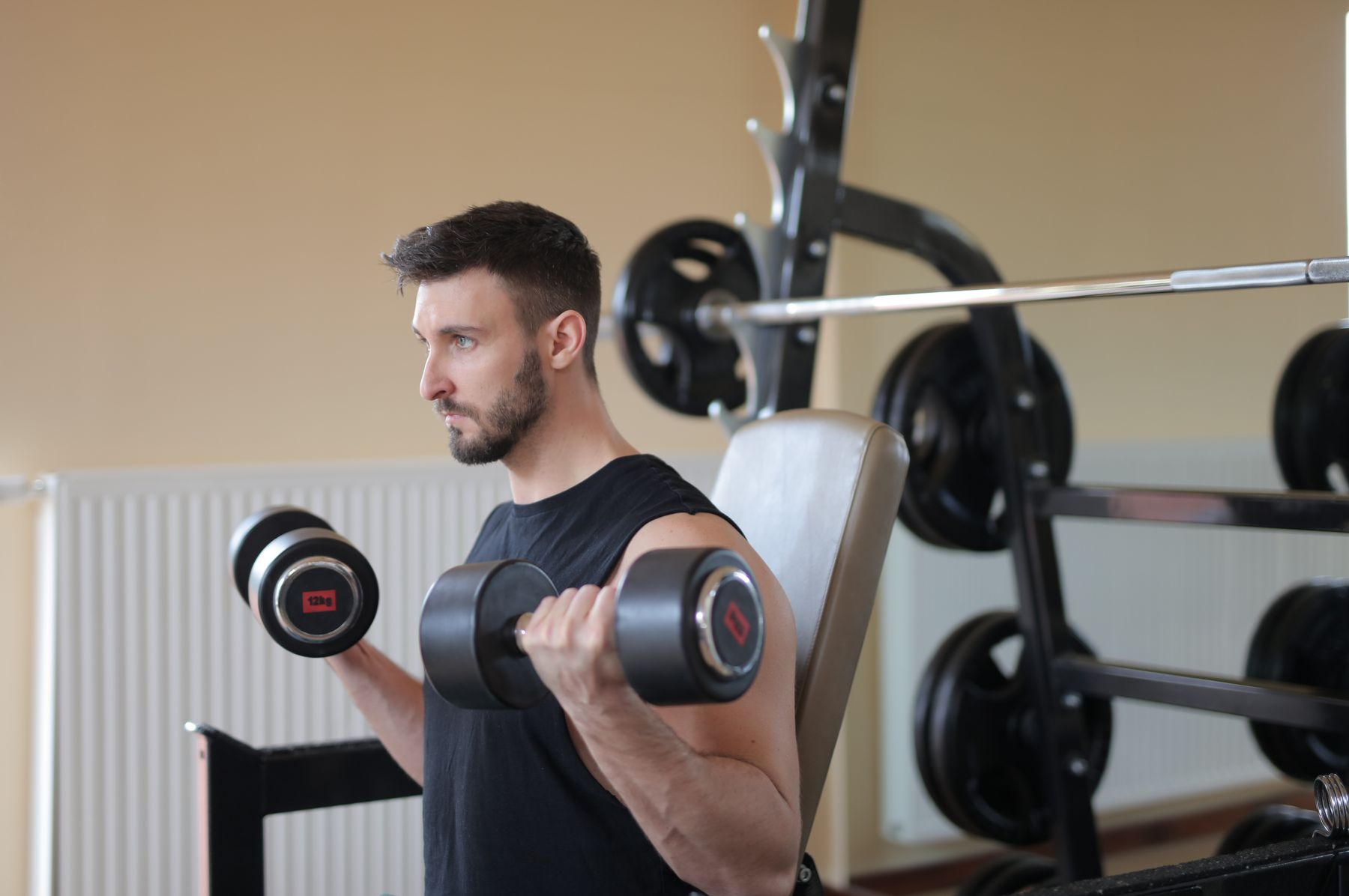
OK, so: biceps. Curls are easy to recognize, which makes arm training look almost too simple. Pick up a weight, bend your elbow, and wait for bigger arms. I understand the appeal, but I would rather have a plan I can explain and repeat than a collection of “secret” exercises.
This is how I think about building stronger arms: train the whole body, give the elbow flexors enough useful work, increase the challenge gradually, and allow time to recover. I am writing as a curious lifter, not claiming years of personal results that I cannot document. Bodies respond differently, so the sample routine here is a starting point, not a promise about how fast anyone’s arms will grow.
First, Know What You Are Training
The biceps brachii helps bend the elbow and turn the forearm so the palm faces up. Other muscles, including the brachialis and brachioradialis, also contribute to elbow flexion. That is one reason I like using more than one grip over time. A palm-up curl and a neutral-grip hammer curl feel different, even though both are simple ways to train the front of the upper arm.
Arm size is not all biceps, either. The triceps make up much of the upper arm, and rows, presses, and other whole-body work help build a balanced routine. If I only do curls, I miss a lot of useful training. I keep direct arm exercises in the programme, but I do not let them replace pulling, pushing, and lower-body work.
Choose Exercises You Can Control
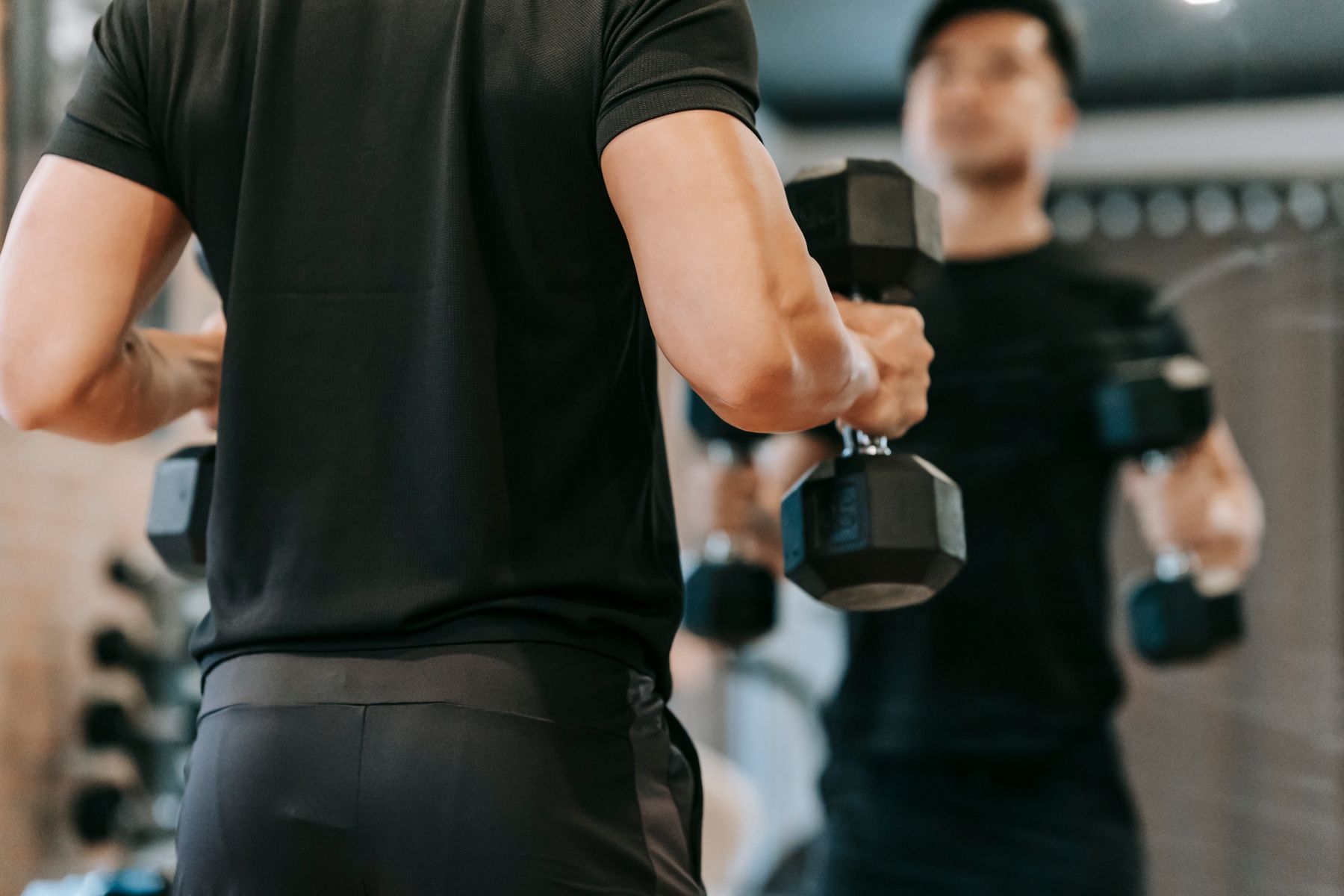
My basic menu has three options. A dumbbell or barbell curl with palms facing up trains the familiar curling pattern. A hammer curl keeps the palms facing each other and gives me another comfortable grip. A row or assisted chin-up trains a broader pulling movement while the arms help. I do not need all of them in every session.
For a standing curl, I begin with a weight I can lift without swinging my torso. I let the elbows bend, bring the weight up through a comfortable range, then lower it with control. I do not force my arms completely straight if that bothers my elbows, and I avoid yanking the weight out of the bottom. A neutral wrist and a steady movement matter more than making the dumbbell look heavy.
Preacher curls can be another option, but the bench does not make them magical. The supported position may help me limit body movement, while the bottom of the lift can feel demanding. If I use it, I start light and stay within a pain-free range. If it irritates my elbow, I change the exercise. There is no single variation I must do to get a worthwhile workout.
How Much Work Is Enough?
The easiest way to overcomplicate arm training is to count endless variations while forgetting the rest of the programme. For a beginner, I would start with one direct curl exercise on each of two weekly strength days. Two sets of roughly eight to twelve controlled repetitions per session give me something simple to repeat. If I also do rows or chin-up progressions, my biceps are already helping with those lifts.
As I become accustomed to the work, I can add a set or a second variation if I have a reason. I would not jump straight from a few sets to a marathon arm day. More weekly volume can help some people build muscle, but it also uses time and recovery. The General resistance-training guidance emphasizes regular training of all major muscle groups at least twice a week and tailoring the plan to the person. That is a more useful foundation than chasing a perfect curl count.
Progress Without Forcing It Every Week
I would keep a small record: exercise, weight, sets, repetitions, and how the last set felt. Suppose I can do two sets of eight curls with clean form. Over the next sessions I may build toward ten or twelve repetitions. When that feels controlled, I can try a slightly heavier weight and return to the lower end of the range. A slow week is not a failure; progress does not need to appear on every workout.
Effort matters, but the original idea that my biceps must burn is not a reliable test. A challenging set can be effective without a dramatic sensation. I aim to finish most sets knowing I could have done a small number of additional good repetitions. If I have to swing or shorten every repetition just to hit a number, I have probably made the load too ambitious for that exercise.
I also watch for joint pain. Ordinary muscular effort is different from a sharp or persistent ache around the elbow or wrist. If pain appears, I reduce the load, change grip or range, or stop and seek qualified advice. Working through pain is not a requirement for arm growth.
A Practical Two-Day Arm Plan
Here is how I would fit direct arm work into full-body training. The rest of each session can include a squat or step-up, a hinge, and a push, so the plan stays balanced.
- Day A: Do two or three sets of a row, followed by two sets of dumbbell curls. Use a weight that lets me keep the movement smooth. Record the repetitions.
- Day B: Do two or three sets of another pull, such as a cable row or an assisted chin-up, followed by two sets of hammer curls. If I prefer the same curl on both days, that is fine.
I leave at least a day between those sessions when possible. If the rest of my training already includes lots of pulling, I may need less direct curl work. If I am recovering well and want more arm work after several weeks, I can add one set before adding an entirely new exercise. The programme should fit my week, not take it over.
What About Chin-Ups, Machines, and Bands?
A chin-up is a demanding pull, not a prerequisite for larger arms. If I cannot do one, an assisted machine, a band-assisted version, or a lat pulldown gives me a way to practice pulling. I would not insist that a new lifter jump to the top bar and attempt uncontrolled negatives. The same principle applies to cable curls and resistance bands: they are tools, not second-class options.
Equipment is less important than having a sensible movement I can perform consistently. If a machine helps me learn to control the path, I can use it. If dumbbells feel better on my wrists, I can use those. I want a programme I can repeat for months, with enough variety to stay interested and enough consistency to notice changes.
Food and Recovery Still Matter
Muscle-building is not a curl-only project. I try to eat regular meals with enough overall food and protein for my needs, and I give hard sessions room to recover. Someone trying to gain muscle may choose to adjust intake, but I would not prescribe a universal calorie target from a short blog post. Health conditions, body size, activity, and personal goals all matter.
Sleep and rest days are also part of the plan. Soreness after a new workout can happen, but being sore all the time is not a badge of success. If my elbows feel irritated or every session is worse than the previous one, I would reduce the workload and examine what changed. Patience is not exciting advice, but it helps me stay consistent.
How I Would Measure Results
I would look at several signals instead of expecting a visible change in four weeks. Can I curl a little more weight with the same form? Can I do more controlled repetitions? Do my pulling exercises feel steadier? If appearance is a goal, I can compare measurements or photos taken under similar conditions after a meaningful stretch of training, rather than judging the mirror after one workout.
How quickly arms change varies. Genetics, training history, food, recovery, and the rest of the programme all play a role. I cannot promise a specific number of weeks or claim that one exercise will create a particular “peak.” What I can do is set up a routine that gives progress a chance.
The Arm Training I Would Keep
My takeaway is pleasantly ordinary: include pulling and pushing in a balanced strength plan, pick one or two curls I can perform comfortably, train them regularly, and add challenge in small steps. I would skip miracle claims, pain-as-proof advice, and the pressure to collect every curl variation online.
Bigger arms may be the goal, but the day-to-day work is simple enough to start now. I would choose a manageable weight, write down what I did, and return for the next session. That is a much better plan than trying to make one workout unforgettable.
发表回复