Progressive overload sounds like gym jargon, but I think of it as a simple question: am I giving my body a reason to adapt over time? That does not mean every workout must set a record. It means I choose a manageable challenge, practice it consistently, and adjust it as I become more capable.
The original version of this article promised strength gains at every level and told me to improve by five percent every week. I would not make that promise. Progress is affected by training experience, sleep, stress, food, health, and the programme itself. A useful plan should include weeks when I hold steady, learn a movement, or back off to recover. Here is how I would put the principle to work without turning it into a demand for endless increases.
What Progressive Overload Actually Means
When I repeat a training task, my body can become better at doing it. To keep building a particular ability, I may eventually need a greater or different challenge. That challenge might be more resistance, more repetitions, another set, a harder exercise variation, or better control through a comfortable range of motion. Which option I choose depends on my goal and how I am responding.
Overload is relative to what I am used to. For a beginner, two sets of a well-controlled sit-to-stand may be new work. For an experienced lifter, that may be an easy warm-up. I do not need to compare my load with someone else’s to decide whether my session is useful.
I also distinguish the goal. If I want to become stronger at a lift, adding load while keeping technique consistent may eventually matter. If I want more muscular endurance, doing more controlled repetitions may be relevant. If I am learning a movement, smoother form is progress even when the number on the weight does not change.
Why “More Every Week” Is a Trap
The simplest version of progressive overload says to do a little more each time. It is appealing because it creates a clear target, but it is not realistic forever. If I added five percent to a lift every week for a year, the number would become absurd. Even early in training, some weeks are for practicing, consolidating, or recovering.
I would look for a trend over several weeks rather than treating one session as a verdict. A poorer day after bad sleep does not erase earlier progress. A session at the same weight can still be useful if the repetitions are steadier or I recover better afterward. The plan needs room for normal human variability.
Start by Recording the Basics
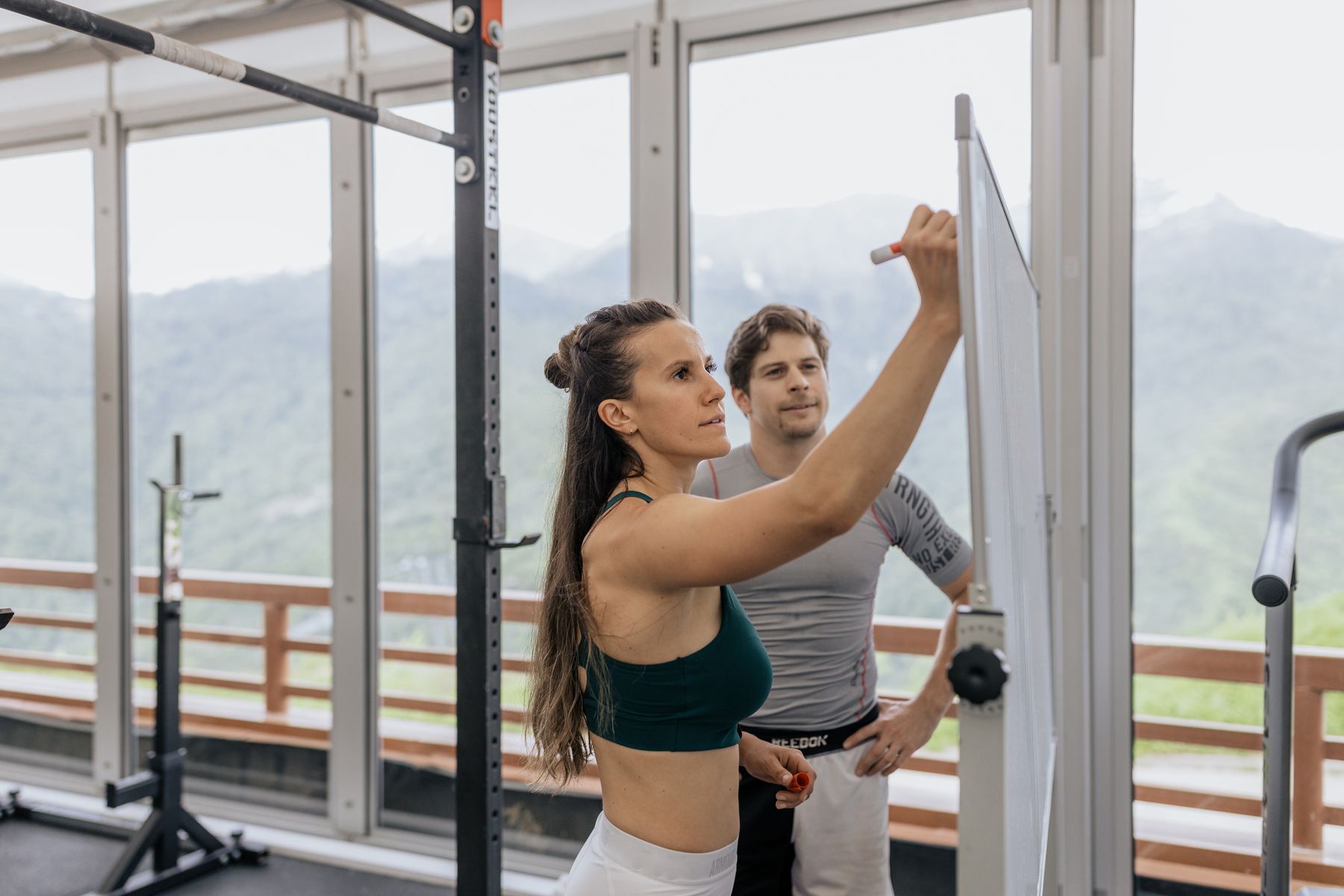
I do not need a complicated spreadsheet. A notebook or phone note with the exercise, load or variation, sets, repetitions, and a brief comment is enough. “Two sets of eight, last set controlled” gives me something to compare with next time. I can also note pain, unusual fatigue, or a change in equipment.
Consistency in the record matters more than perfect data. If I use a different machine, the number on its weight stack may not compare neatly with the old one. If I shorten the range of motion to lift more, the higher number may not represent the improvement I think it does. I try to compare similar movements performed in a similar way.
One Practical Method: A Repetition Range
Suppose I choose a goblet squat and a range of eight to twelve repetitions for two sets. I start with a weight that allows eight controlled repetitions while leaving some effort in reserve. Over later sessions, I might reach nine, then ten, then twelve repetitions. When I can do both sets near the top of the range with the same quality, I can try a slightly heavier weight and return to the lower end.
This is sometimes called double progression. I like it because it does not require a weight increase on a calendar date. If the heavier dumbbell is too big a jump, I can keep practicing at the current load, add a set if it fits the programme, or use a different tool. I do not have to force a number that changes my technique.
The same approach works for a push-up. I might begin with hands on a sturdy bench, build comfortable repetitions, then choose a slightly lower surface. That is a change in difficulty without adding plates to a bar.
More Sets Are an Option, Not a Free Upgrade
Adding a set increases the amount of work I do. It can be useful when I have recovered well and want more practice or training volume. But it also takes time and energy. I would not add sets to every exercise at once. I might choose one movement to change, then see how the next week feels.
Shortening rest periods is another possible way to make a workout harder, but it changes the training task. If my aim is to lift a heavy weight with good form, enough rest may help me perform the next set well. I would not cut rest just to make the session feel tougher. A shorter rest period may be more relevant for a conditioning goal.
My Two-Day Example
For a beginner doing full-body strength work twice a week, I would keep the routine simple. Each day might include a squat or step-up, a hinge, a push, and a pull. I could do one or two sets of each at first, using variations I can control. After several weeks, I would decide which movements are ready for a little more work.
- Day A: Goblet squat, Romanian deadlift, push-up variation, and row. Record the sets, repetitions, and how the last set felt.
- Day B: Step-up, hip hinge or another lower-body movement, chest press, and pulldown. Use the same record format.
On the next week, I might try one additional repetition on the row while keeping the other exercises the same. If the squat felt unstable, I would practice it again at the current load. That is a plan with a direction, but not a demand for four personal records in one session.
What If I Stop Improving?
A plateau can have several explanations. I might need more practice, better recovery, a different training dose, or simply more time. Before changing everything, I would check whether I have been training consistently and whether the comparison is fair. A two-week pause in progress is not proof that the whole programme has failed.
If I have been pushing hard for a while and feel persistently tired, a lighter week may be more useful than another attempt to add weight. If the exercise causes pain, I would adjust it and seek qualified guidance when needed. If I am doing very little work and recovering easily, adding a modest set or another session may be worth considering. The response depends on the reason, not a universal five-percent rule.
Technique and Safety Still Count
I do not call a heavier lift progress if I get there by losing control or turning the movement into something else. A comfortable range of motion and repeatable technique let me understand what has changed. For a new lift or a heavier barbell exercise, coaching and appropriate safety equipment can be valuable.
Effort also needs context. I can work hard without taking every set to absolute failure. If I am learning an exercise, I would leave enough margin to repeat the movement well. Sharp or persistent pain is a reason to stop and reassess, not a signal to add another plate.
How I Would Think About Long-Term Progress
Early improvements can come from learning a movement as well as changes in strength. Later progress often slows. I would expect both phases and avoid promising a particular number of pounds on the bar by a particular date. Goals can also change. At some point I may want to maintain strength while spending more time on sport, travel, or another part of life. Maintenance is not failure.
My best use of progressive overload is to make training deliberate. I choose an exercise I can repeat, record what I did, and make a small change when the current task is consistently manageable. I leave room for recovery and for sessions where the best decision is to hold steady.
The Principle I Would Keep
Progressive overload is a way to guide training, not a guarantee of endless weekly gains. I do not need a fabricated success story, a mandatory five-percent increase, or a promise that everyone will break through every plateau. I need a sensible starting point, a record, and the judgment to change the challenge when I am ready.
That sounds less dramatic than “do more forever,” but it is easier to use. If I can train consistently, notice what is improving, and adjust without sacrificing form or recovery, I have a practical system for getting stronger over time.
发表回复